

A career in private banking is one of the most preferred choices among graduates looking for stable employment, attractive salaries, and long-term career growth. Unlike many government banking jobs, private banks recruit candidates throughout the year for various customer service, sales, operations, relationship management, and back-office roles. This allows aspiring professionals to enter the banking industry without waiting for annual competitive examinations.
However, many candidates hesitate to apply because they are unsure about the eligibility requirements. Questions such as “What qualification is required?”, “Is there an age limit?”, “Can freshers apply?”, and “What skills do private banks expect?” are common among job seekers.
This guide explains the complete private bank recruitment eligibility criteria, including educational qualifications, age requirements, essential skills, and additional factors that improve your chances of getting selected.
Understanding the Eligibility Criteria for Private Bank Recruitment
Private banks recruit candidates based on their ability to perform the responsibilities of the role rather than relying solely on academic scores. While eligibility varies slightly between banks and job positions, most private banks follow similar hiring standards.
Educational Qualification Required
The minimum qualification for most entry-level private banking roles is a bachelor’s degree from a recognized university.
Commonly accepted degrees include:
- B.Com
- BBA
- B.Sc
- B.A.
- BCA
- B.Tech
- MBA
- M.Com
Candidates from any educational background can apply if they possess good communication skills and are willing to learn banking operations.
Professional banking training can further improve employability by helping candidates understand banking products, customer service, KYC procedures, documentation, and financial services before attending interviews.
Minimum Academic Requirements
Unlike competitive government examinations, private banks generally do not insist on exceptionally high academic scores.
Most recruiters look for:
- Graduation from a recognized institution
- No active academic backlogs
- Basic computer knowledge
- Strong communication ability
Many banks focus more on interview performance, attitude, confidence, and customer handling skills than on percentage marks alone.
Age Limit for Private Bank Recruitment
The age criteria vary depending on the position and the bank.
Generally:
- Fresh graduates between 21 and 28 years are preferred for entry-level roles.
- Candidates with prior banking experience may be considered up to 35 years or more, depending on the position.
- Relationship managers, operations executives, branch officers, and sales professionals often have flexible age requirements based on experience.
There is no single universal age limit applicable to all private banks.
Can Freshers Apply?
Yes.
Most entry-level roles are specifically designed for fresh graduates.
Private banks regularly hire freshers for positions such as:
- Customer Service Executive
- Relationship Officer
- Sales Officer
- Banking Associate
- Operations Executive
- Teller
- Business Development Executive
Candidates who have completed banking training and interview preparation often have an advantage because they are already familiar with banking terminology and customer interaction.
Is Previous Banking Experience Mandatory?
No.
Experience is preferred for senior roles but is not mandatory for most entry-level positions.
Banks usually provide role-specific training after recruitment. Candidates who demonstrate willingness to learn, professional behaviour, and good communication often perform well even without prior experience.
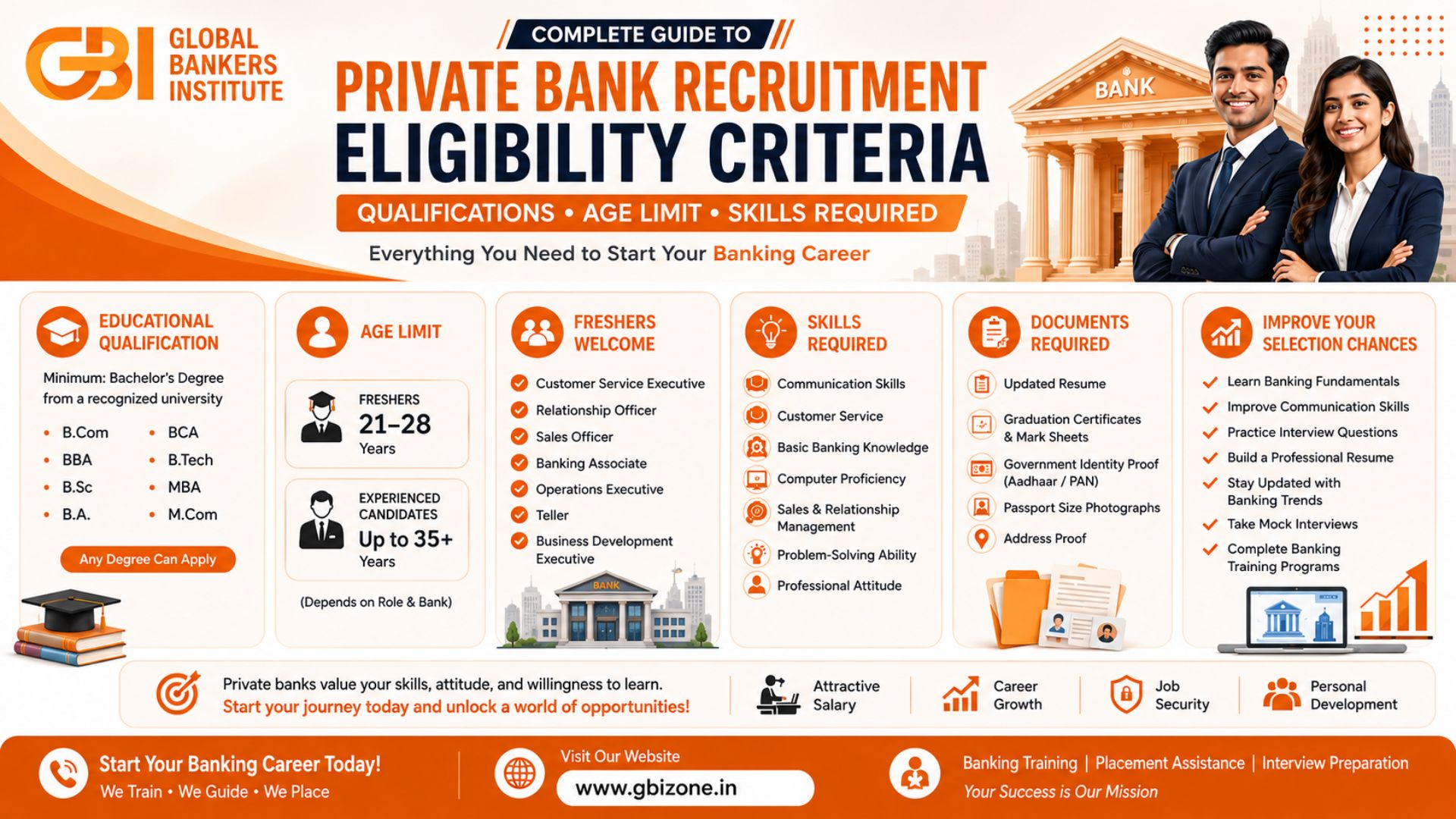
Skills Required to Build a Successful Career in Private Banking
Meeting the educational criteria alone is not enough. Private banks look for candidates who can deliver excellent customer service while maintaining accuracy and professionalism.
Communication Skills
Communication is one of the most important skills during the recruitment process.
Candidates should be able to:
- Speak confidently
- Listen carefully to customers
- Explain banking products clearly
- Handle customer queries professionally
Both English and the local language are valuable in customer-facing roles.
Customer Service Skills
Private banking revolves around customer satisfaction.
Recruiters prefer candidates who can:
- Build trust with customers
- Resolve concerns politely
- Maintain positive relationships
- Deliver quality service consistently
A customer-focused attitude significantly improves selection chances.
Basic Banking Knowledge
Candidates are expected to understand the fundamentals of banking.
Some commonly tested topics include:
- Savings and Current Accounts
- Fixed Deposits
- Loans
- Debit and Credit Cards
- KYC Guidelines
- Banking Products
- Digital Banking
- Basic Financial Services
Having practical exposure through training can make interviews much easier.
Computer Proficiency
Almost every banking role requires candidates to work with banking software and digital platforms.
Basic knowledge of:
- MS Word
- MS Excel
- Email communication
- Internet usage
- Digital documentation
is generally expected.
Learning these skills before attending interviews increases confidence.
Sales and Relationship Management Skills
Many private banking roles involve promoting banking products.
Candidates should be comfortable with:
- Understanding customer needs
- Recommending suitable banking solutions
- Meeting performance targets
- Building long-term customer relationships
Strong interpersonal skills often matter more than prior sales experience.
Problem-Solving Ability
Bank employees deal with customer requests every day.
Recruiters look for candidates who can:
- Think logically
- Remain calm under pressure
- Resolve issues efficiently
- Follow banking procedures accurately
This ability is commonly assessed during interviews.
Professional Attitude
Private banks value professionalism throughout the hiring process.
Candidates should demonstrate:
- Punctuality
- Positive body language
- Confidence
- Willingness to learn
- Ethical behaviour
- Teamwork
A professional attitude leaves a lasting impression on interviewers.
Documents Required During Recruitment
Applicants should generally keep the following documents ready:
- Updated Resume
- Graduation Certificates
- Mark Sheets
- Government Identity Proof
- Passport Size Photographs
- Address Proof
- PAN Card
- Aadhaar Card
Having all documents prepared helps avoid delays during recruitment.
Tips to Improve Your Eligibility
Even if you already meet the basic eligibility requirements, you can strengthen your profile by:
- Learning banking fundamentals
- Improving communication skills
- Practising interview questions
- Building a professional resume
- Staying updated with banking industry trends
- Participating in mock interviews
- Completing banking training programs
These additional efforts help candidates stand out during the recruitment process.
Conclusion
Understanding the private bank recruitment eligibility criteria is the first step toward building a successful banking career. While educational qualifications and age requirements are important, recruiters also evaluate communication skills, customer service ability, banking knowledge, confidence, and professionalism. The good news is that most entry-level private banking roles welcome fresh graduates who are willing to learn and grow.
If you’re planning to start your career in the banking sector, gaining practical training and interview preparation can significantly improve your confidence and job readiness. Global Bankers Institute helps aspiring banking professionals develop industry-relevant skills and prepare for private banking careers. You can also explore opportunities through our Private Bank Job Placement Agency in Tamil Nadu or learn more about Bank Jobs without exam in Tamil Nadu to find suitable career options based on your qualifications.