

Starting a career in the banking industry is a goal for many graduates, but one concern often holds them back—“I don’t have any experience.” The good news is that private banks regularly hire fresh graduates for a variety of entry-level roles and provide training to help them succeed. What matters most is your willingness to learn, communication skills, professionalism, and ability to adapt to a customer-focused environment.
Many successful banking professionals began their careers without prior experience. By building the right skills, understanding how the industry works, and preparing strategically, you can confidently secure your first private banking job and build a rewarding long-term career.
This guide explains practical steps to help you start and grow a successful private bank career, even if you’re a fresher.
Steps to Start a Private Bank Career Without Experience
Every successful banking career starts with proper preparation. Rather than worrying about experience, focus on developing the qualities that recruiters look for in entry-level candidates.
Understand How the Private Banking Industry Works
Before applying for jobs, it’s important to understand the structure of the banking industry.
Private banks recruit candidates for roles such as:
- Customer Service Executive
- Relationship Officer
- Banking Associate
- Operations Executive
- Sales Officer
- Teller
- Branch Support Executive
Learning about these roles helps you identify which career path matches your interests and strengths.
Build Strong Banking Fundamentals
You don’t need years of experience to impress recruiters, but you should understand the basics of banking.
Important topics include:
- Savings and Current Accounts
- Fixed Deposits
- Loan Products
- KYC Guidelines
- Banking Documentation
- Digital Banking
- Payment Systems
- Customer Service
Having practical knowledge allows you to answer interview questions with confidence and demonstrates your genuine interest in the banking sector.
Improve Your Communication Skills
Communication is one of the most valuable skills in private banking.
Recruiters look for candidates who can:
- Speak confidently with customers
- Explain banking products clearly
- Listen attentively
- Resolve customer queries professionally
- Build positive relationships
Practising spoken English, improving your vocabulary, and participating in mock interviews can significantly enhance your confidence.
Develop Basic Computer Skills
Modern banking relies heavily on technology.
Candidates should be comfortable using:
- MS Word
- MS Excel
- Email communication
- Internet browsing
- Online documentation
- Digital banking platforms
Basic computer proficiency is often considered an essential requirement for entry-level banking positions.
Create a Professional Resume
Your resume creates the first impression during the recruitment process.
A well-structured resume should highlight:
- Educational qualifications
- Technical skills
- Communication abilities
- Certifications
- Academic achievements
- Internship experience (if any)
- Soft skills
Even without work experience, a professional resume demonstrates seriousness and readiness for employment.
Participate in Banking Training Programs
Banking training programs bridge the gap between academic education and industry expectations.
These programs typically cover:
- Practical banking operations
- Customer handling
- Banking products
- Documentation procedures
- Compliance
- Interview preparation
- Resume building
Practical training gives fresh graduates greater confidence during interviews and prepares them for workplace responsibilities.
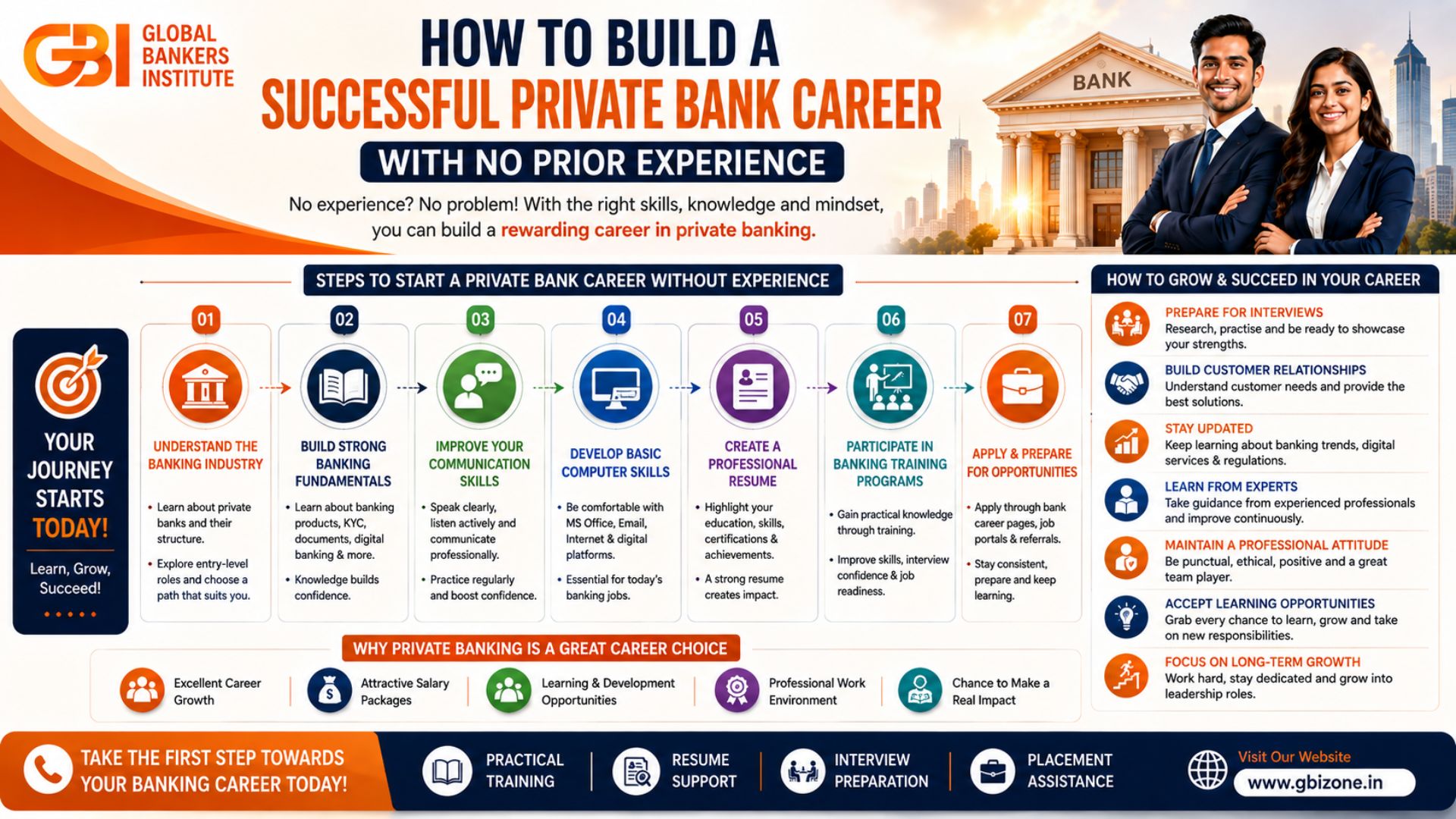
How to Grow and Succeed in Your Private Banking Career
Getting your first job is only the beginning. Building a successful banking career requires continuous learning, professional development, and a commitment to delivering excellent customer service.
Prepare Thoroughly for Interviews
Many candidates lose opportunities because they attend interviews without adequate preparation.
Before every interview:
- Research the bank
- Review common HR questions
- Study basic banking concepts
- Practise introducing yourself
- Prepare examples that demonstrate your strengths
Interview preparation helps reduce nervousness and improves your overall performance.
Build Customer Relationship Skills
Private banking is built around customer trust and satisfaction.
Successful professionals know how to:
- Understand customer needs
- Communicate patiently
- Offer suitable banking solutions
- Maintain professionalism
- Build long-term relationships
Strong customer relationship skills often lead to better career growth and promotion opportunities.
Stay Updated with Banking Trends
The banking industry continues to evolve with advancements in digital technology and financial services.
Regularly learning about:
- Digital banking
- UPI and online payments
- Banking regulations
- Financial products
- Customer service practices
helps you remain competitive and demonstrates your commitment to professional growth.
Learn from Experienced Professionals
Observe how experienced banking professionals communicate with customers, solve problems, and manage daily responsibilities.
Seeking guidance from mentors, trainers, or senior colleagues can accelerate your learning and help you avoid common mistakes during the early stages of your career.
Maintain a Professional Attitude
Professionalism is often valued more than experience.
Always demonstrate:
- Punctuality
- Positive attitude
- Willingness to learn
- Respect for colleagues and customers
- Ethical behaviour
- Teamwork
These qualities help create a strong reputation within the organisation.
Accept Learning Opportunities
Every new responsibility contributes to your career growth.
Volunteer to:
- Learn new banking processes
- Assist senior team members
- Handle customer interactions
- Participate in training sessions
- Develop additional skills
Continuous learning increases your confidence and prepares you for future leadership roles.
Focus on Long-Term Career Growth
A private banking career offers numerous opportunities for advancement.
With consistent performance and skill development, professionals can progress from entry-level positions to roles such as:
- Senior Relationship Manager
- Branch Operations Manager
- Branch Manager
- Wealth Relationship Manager
- Credit Officer
- Area Sales Manager
Building a successful career requires patience, dedication, and continuous improvement rather than expecting immediate promotions.
Conclusion
Starting a private bank career without prior experience is entirely possible when you focus on building the right skills and preparing effectively for the recruitment process. Private banks value candidates who demonstrate strong communication, banking knowledge, professionalism, and a willingness to learn. By investing in practical training, interview preparation, and continuous skill development, fresh graduates can confidently begin their journey in the banking industry.
If you’re looking for structured guidance to start your banking career, Global Bankers Institute offers practical training, resume support, interview preparation, and placement assistance to help candidates become job-ready. You can also explore our Bank Job Consultancy & Placement Services in Tamil Nadu or connect with our Private Bank Job Placement Agency in Tamil Nadu to discover career opportunities and take the first step towards a successful future in private banking.